Measured my earphones with an IEC711 clone coupler
I’ve measured speaker frequency response with REW before, but doing the same for earphones was difficult. Measuring earphones, which you listen to inside your ear, needs a different microphone than the one for speakers — an IEC711 coupler.
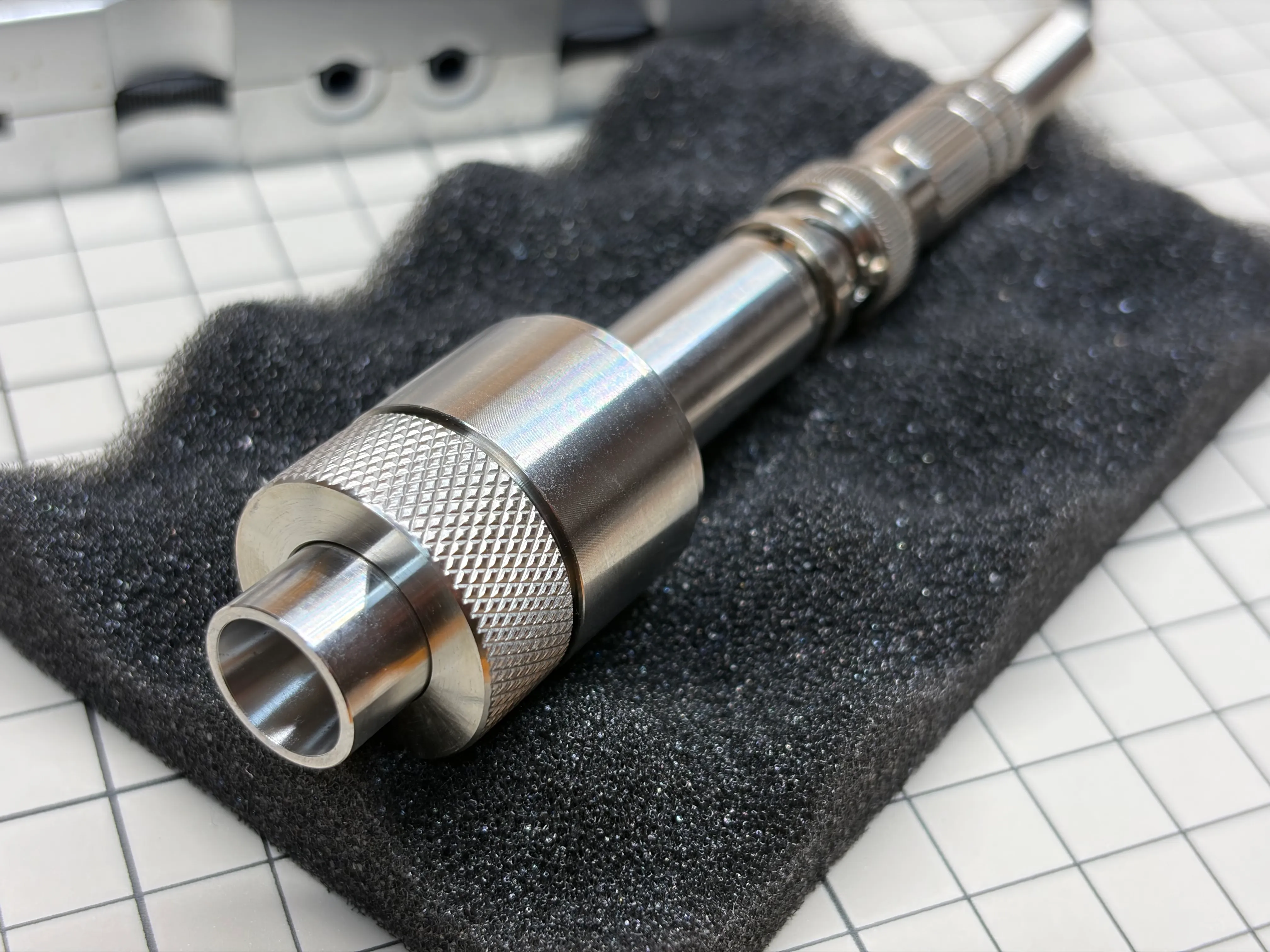
IEC711 (properly IEC 60318-4) is the standard for a measurement coupler that mimics the acoustic impedance of the human ear canal. Insert an earphone into it and measure with the built-in microphone, and you get a frequency response close to how it actually sounds inside the ear. The genuine instrument costs several hundred thousand yen, but a clone can be had for much less.
I picked up an IEC711 clone coupler on AliExpress at a reasonable price — about ¥12,000 — so I gave it a try.
Connections
To run REW on my Mac and take measurements, I connected a USB audio interface (Roland UA-1EX), the coupler, and the earphone like this. The coupler uses 3.5 mm plug-in power, so pick an interface that supports it. The UA-1EX is an old one, but it still worked on macOS 26.
%%{init: {
  "theme": "base",
  "themeVariables": {
    "primaryColor": "#ffffff",
    "primaryBorderColor": "#444",
    "lineColor": "#666",
    "clusterBkg": "#fafafa",
    "clusterBorder": "#bbb",
    "nodePadding": 50
  }
}}%%

flowchart LR

PC("fa:fa-computer PC / REW")
IF("Roland UA-1EX")
EARPHONE("fas:fa-headphones Earphone")
COUPLER("IEC711 Coupler")

PC <--USB--> IF
IF --headphone out--> EARPHONE
EARPHONE -.acoustic.-> COUPLER
COUPLER --plug-in power--> IF

style COUPLER stroke-width:3px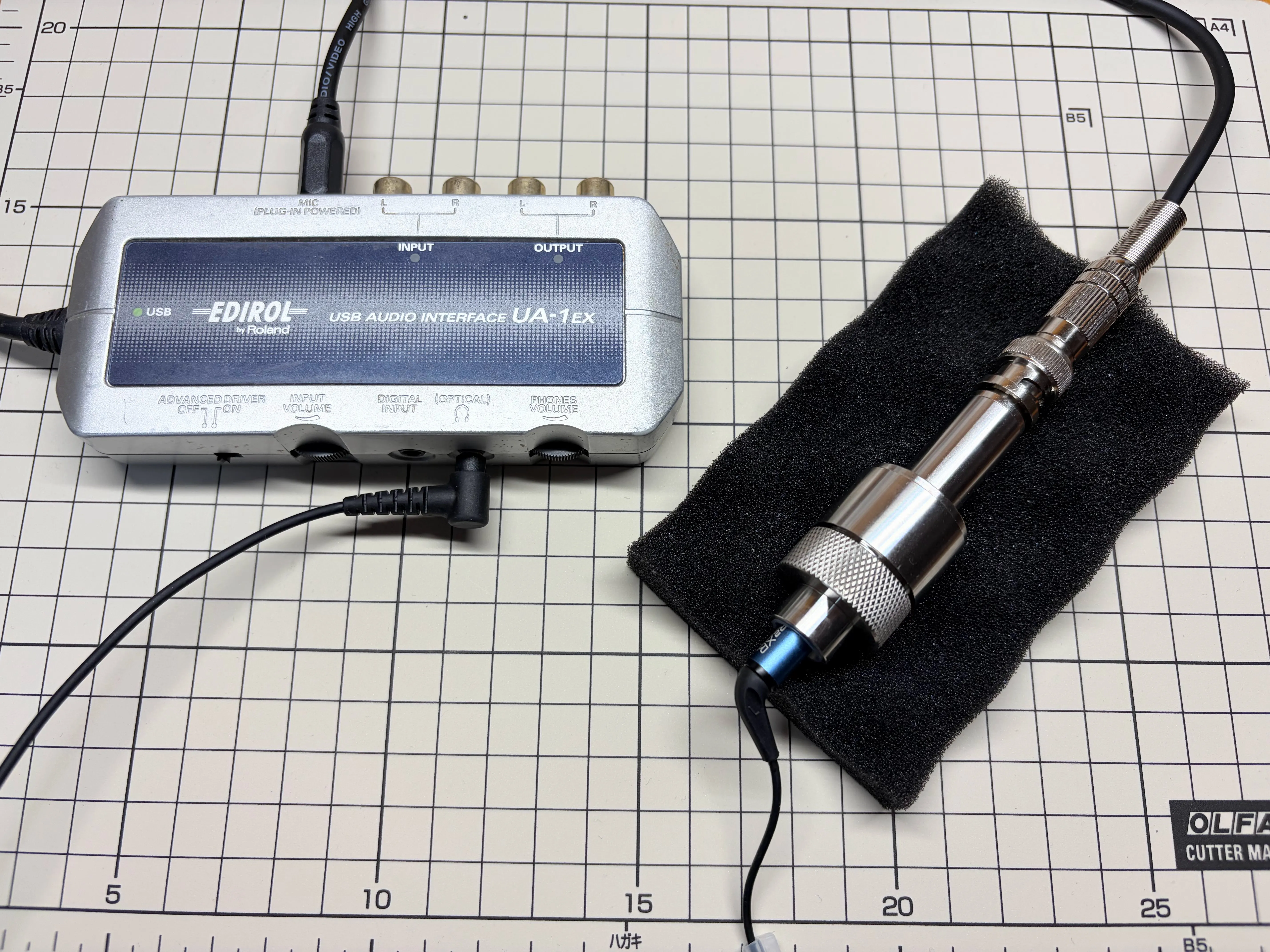
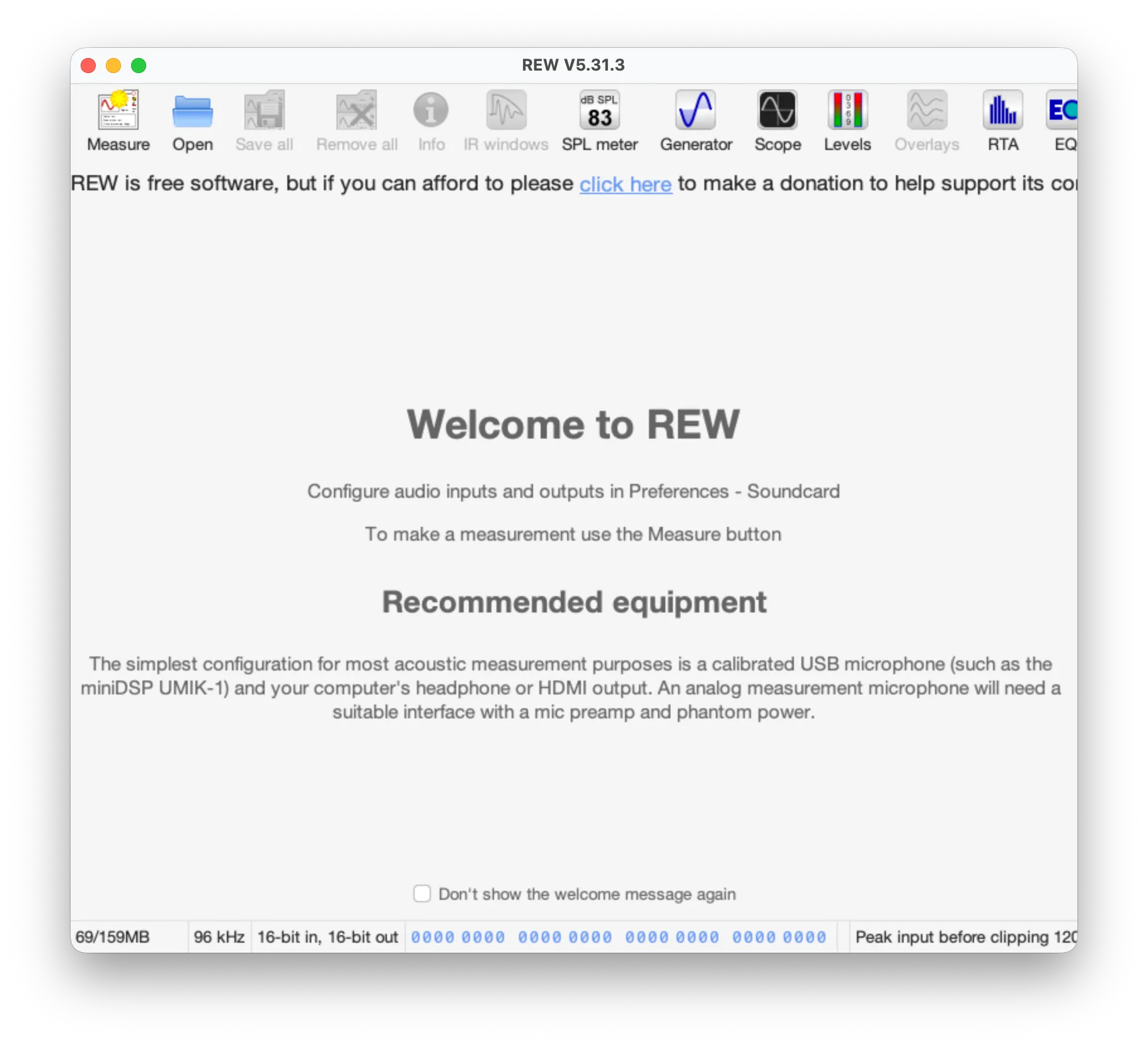
REW setup
REW V5.31.3.
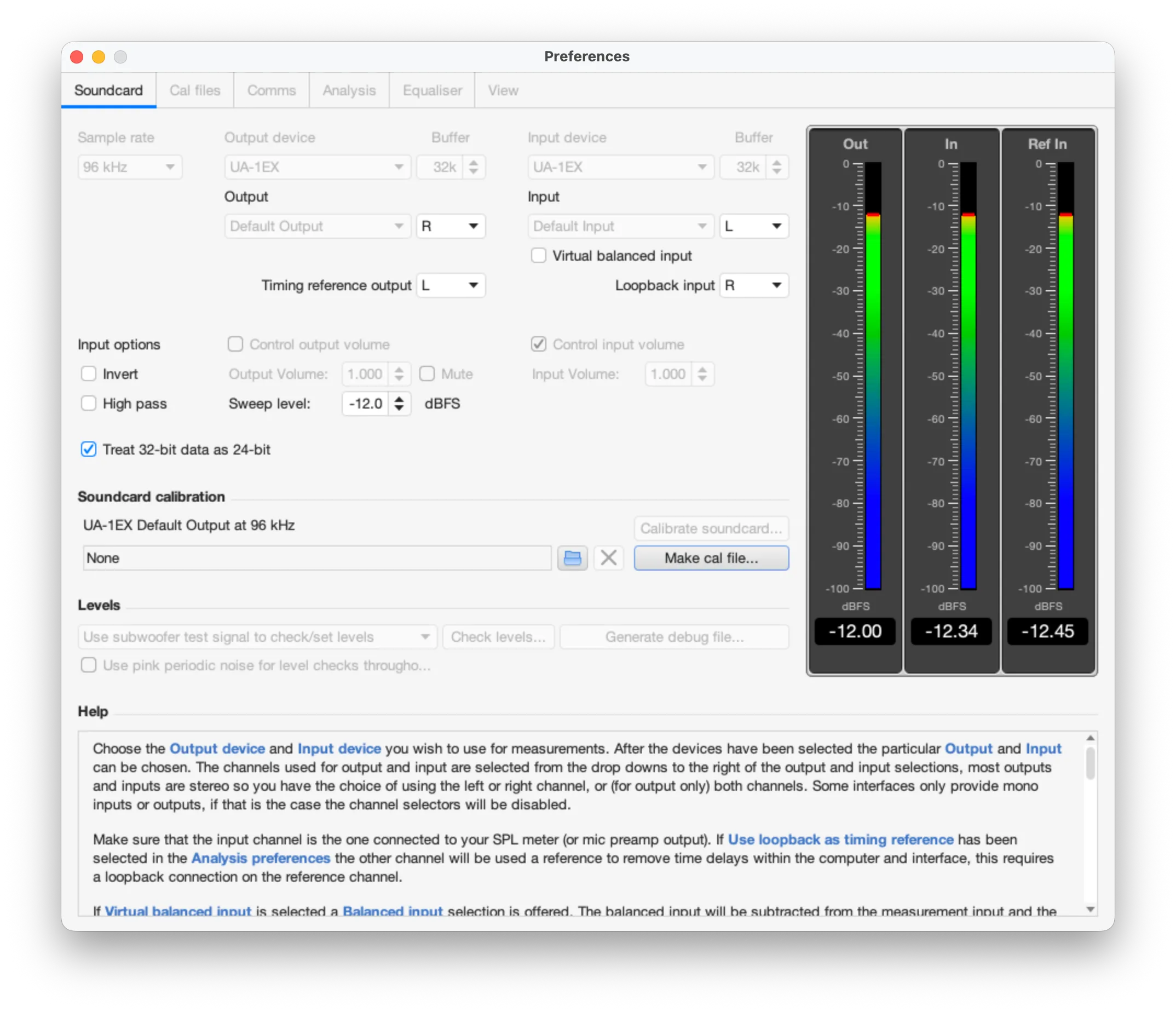
Soundcard
Under Preferences > Soundcard, set the interface as the output and the input. The output is the channel the earphone is on, the input is the channel the coupler is on. I adjusted the input and output levels aiming for -12.0 dBFS. I set the sample rate to 96 kHz.
Coupler calibration
The shop I bought it from sent me a calibration file for the coupler when I asked. Load it under Preferences > Cal files.
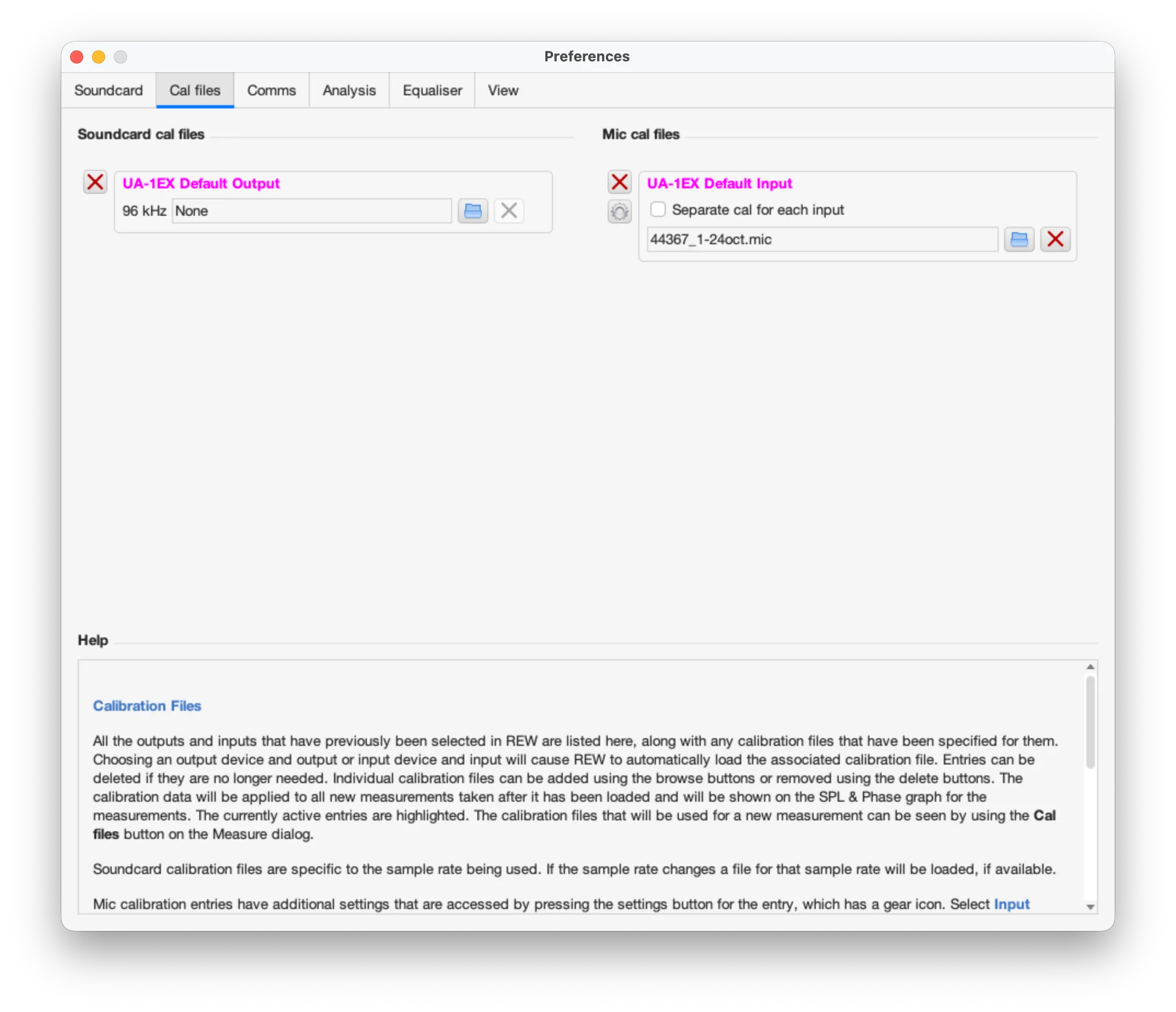
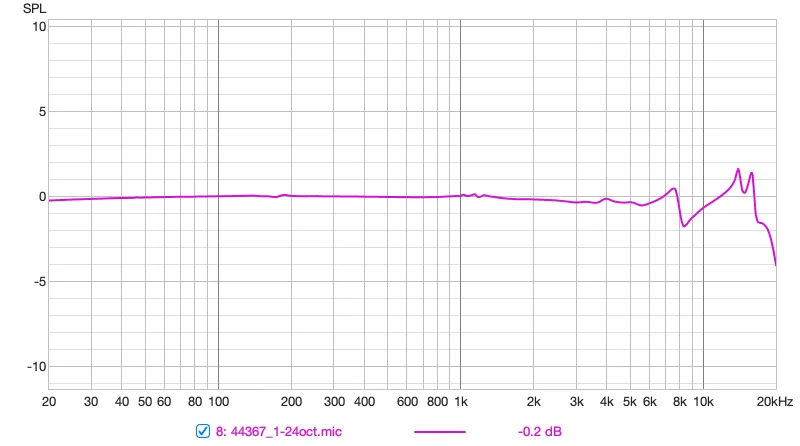
The filename contains the unit’s serial number, so it looks like a measurement of the individual unit rather than something common to the model. It’s nearly flat within ±0.5 dB up to 6 kHz, with correction applied above that.
Soundcard calibration
I wasn’t sure whether it was okay to connect the interface output straight to the plug-in power input for a loopback measurement, so I skipped it. In any case, with a decent interface, skipping it shouldn’t change the result much.
SPL calibration
Skipped this too. Getting absolute dBSPL values requires a calibrated reference. This time I don’t care about absolute values — the relative response is enough — so I’m not going that far.
Measurements
First I measured a few of the earphones I had on hand. I swept from 20 Hz to 20 kHz.
Smoothing is 1/6 octave. Since I didn’t do an SPL calibration, ignore the absolute values on the vertical axis and look at the shape of the curve.
For comparison I overlaid the Harman in-ear 2019 target, aligned around 500 Hz to 1 kHz. The dashed line is the Harman target, the solid lines are the left and right measurements.
SHURE SE215 Special Edition
Single dynamic driver. The eartips are the included Soft Flex Sleeves.
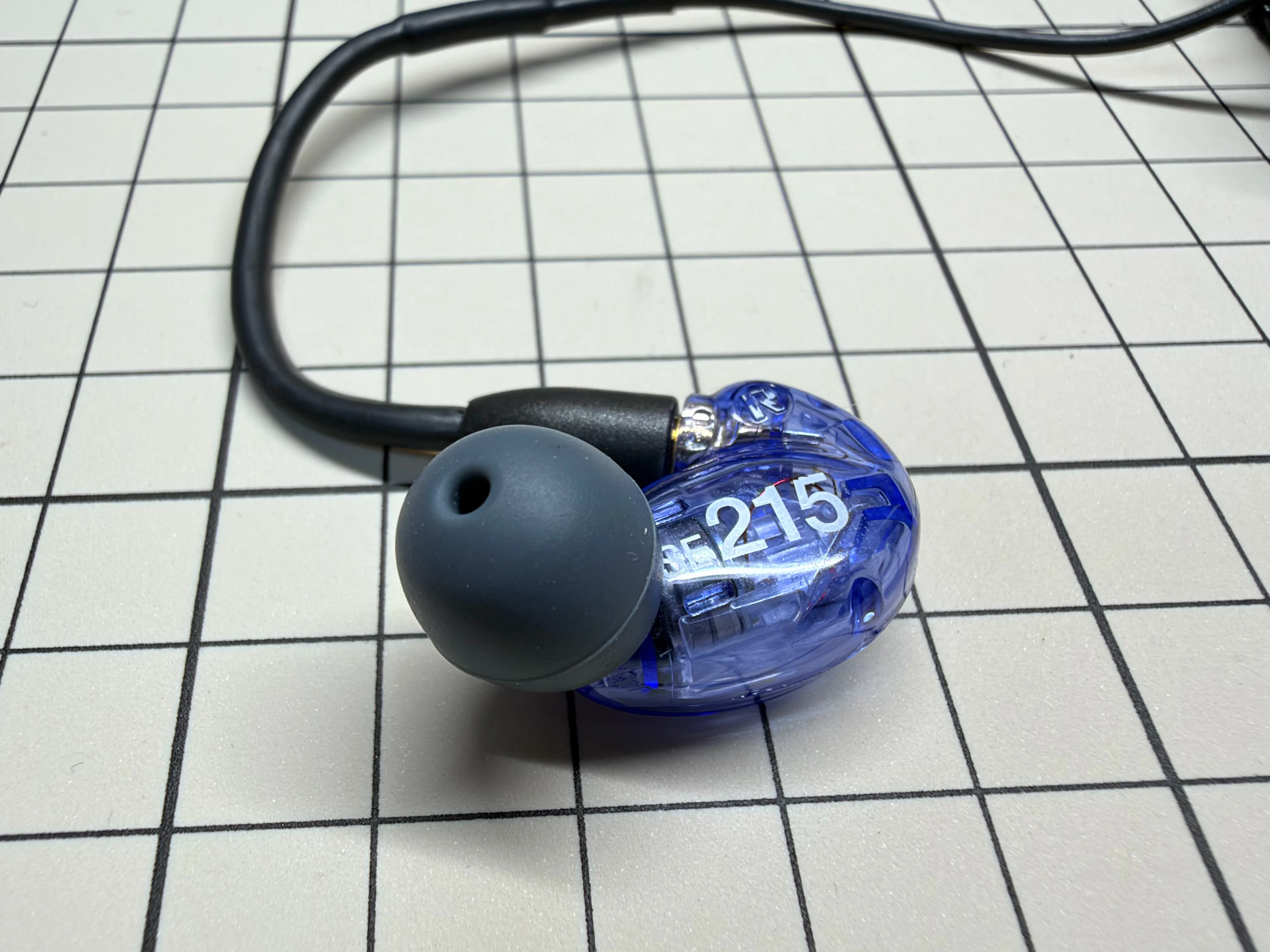
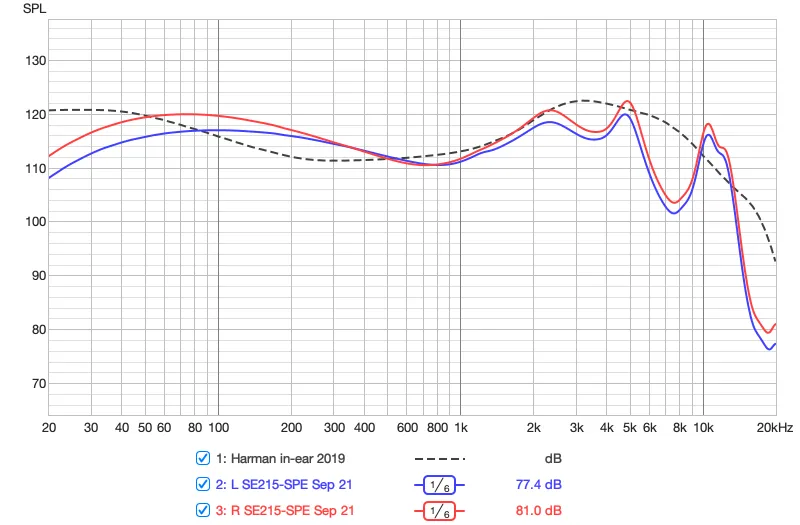
The overall trend follows the target, but 100 Hz to 300 Hz comes out high. There are several dips above 2 kHz. The dip at 8 kHz is deep. The channel difference is on the large side, though it could be down to how I measured.
YU9 U-554
Single balanced armature driver. Bought on AliExpress. The eartips are older Etymotic triple-flange ones.
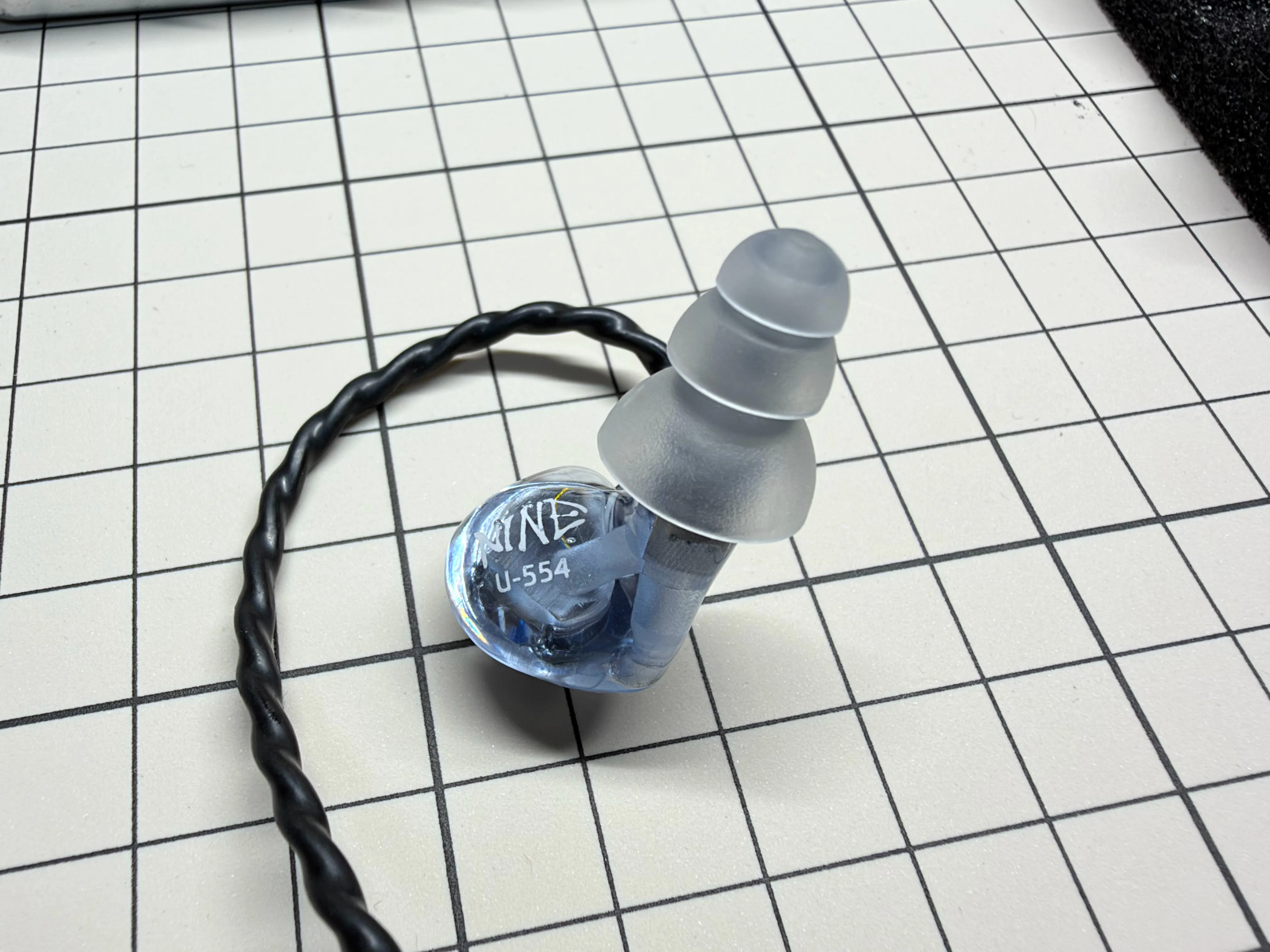
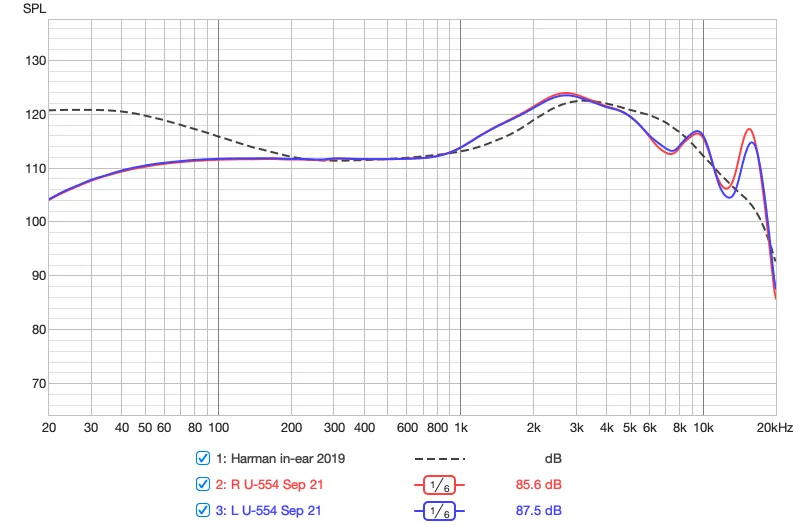
200 Hz to 1 kHz is nearly flat and follows the target. As you’d expect from a BA, the bass rolls off a lot. There’s a slight dip at 7 kHz. There’s almost no channel difference.
ETYMOTIC ER2XR
Single dynamic driver. For the ER2XR I also looked at how the frequency response changes with different eartips.
Included triple-flange eartips
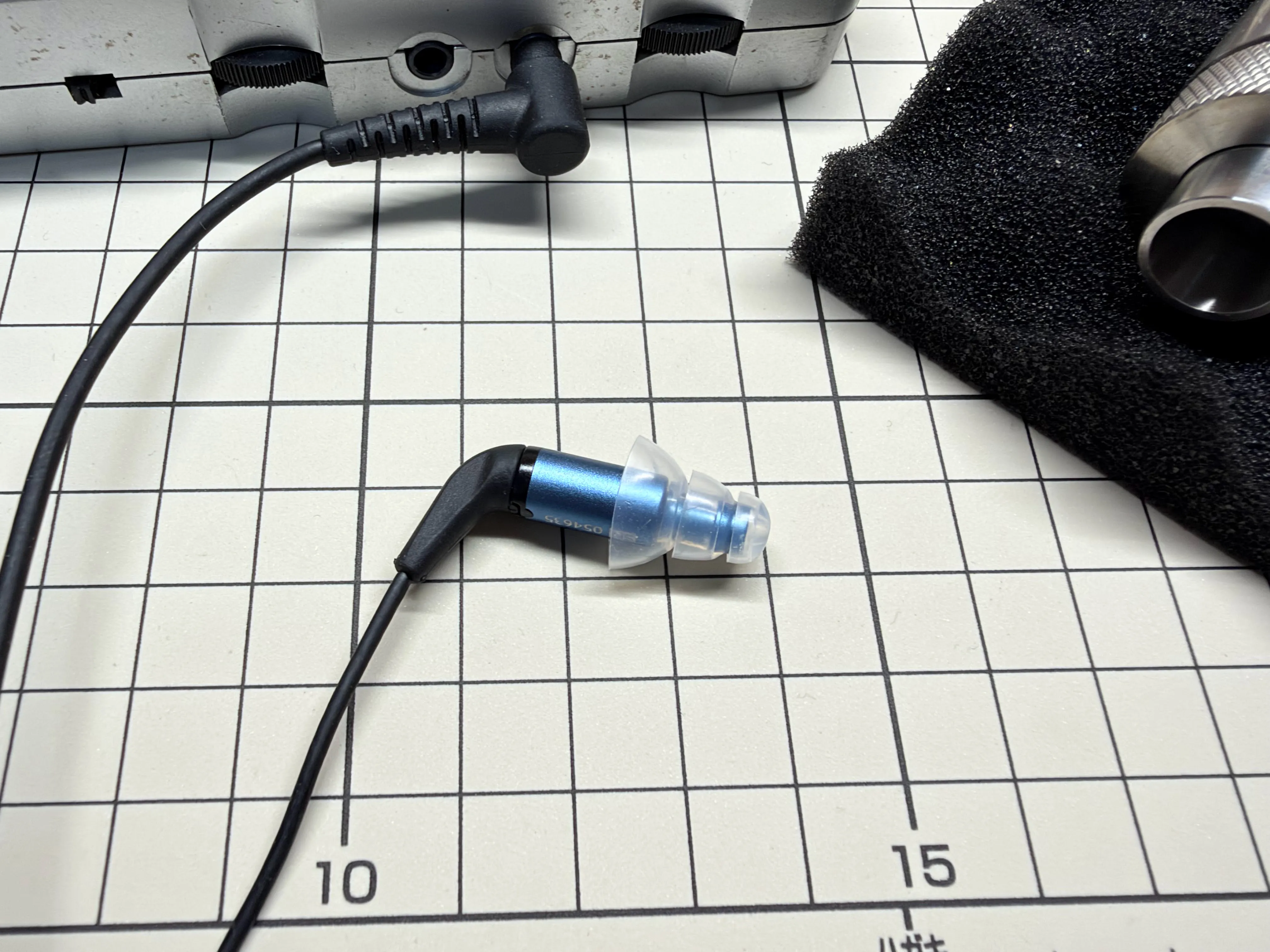
I measured with the same triple-flange eartips, changing how they were fitted into the coupler.
Deeper
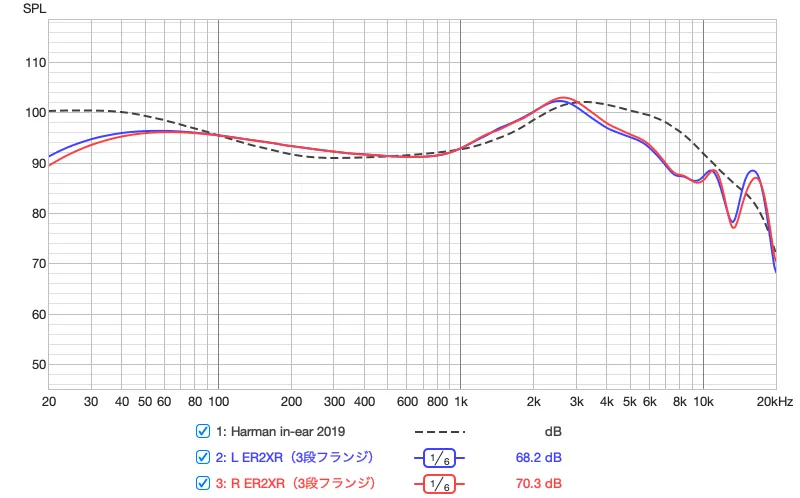
100 Hz to 1 kHz matches the target almost exactly. Below that it gradually falls short. Above the 2.7 kHz peak it drops off faster than the target. There’s almost no channel difference.
Shallower
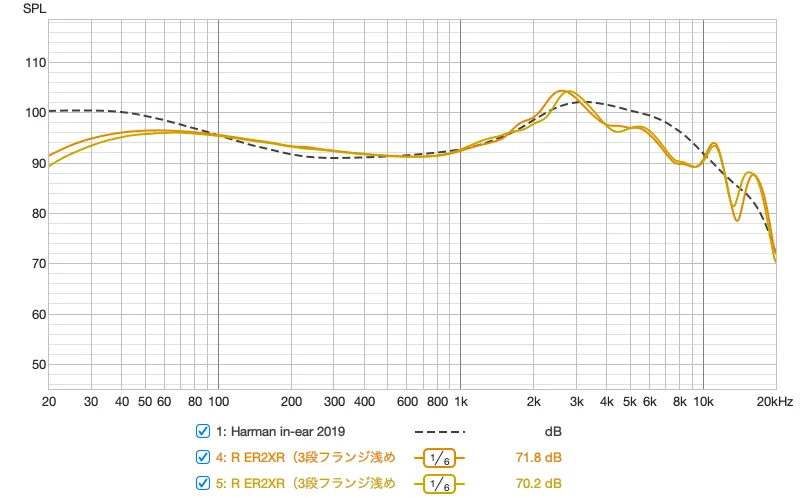
Below 1 kHz it’s no different from the deeper fit. As long as there’s a seal, the bass doesn’t seem to depend much on insertion depth. What changes is the treble — from the 2.7 kHz peak up it now comes out higher. Again the channel difference is small.
Included double-flange eartips
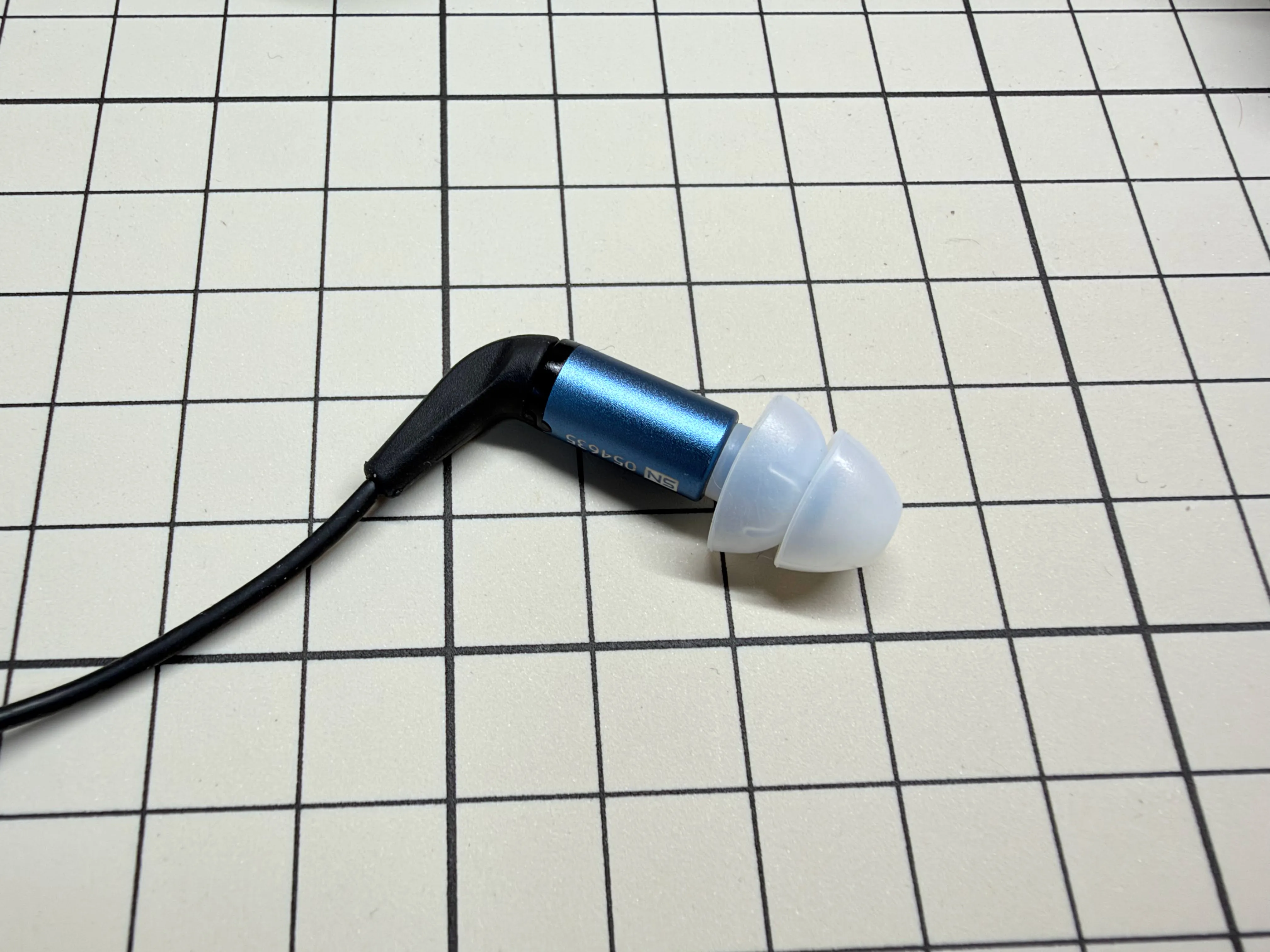
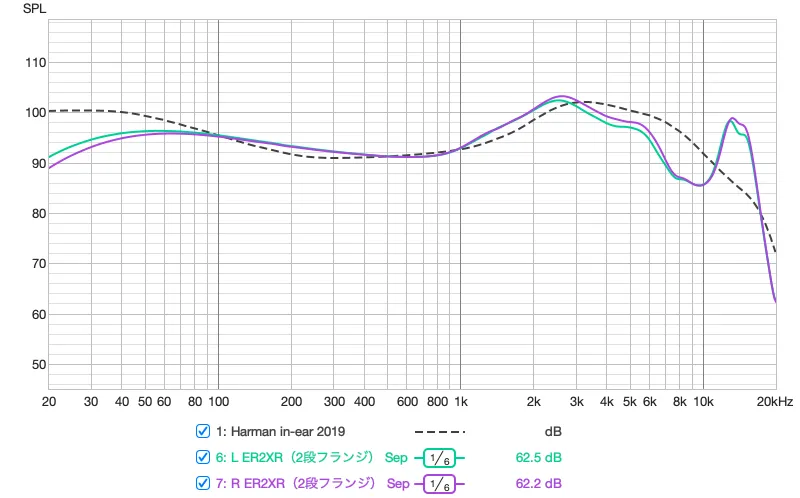
Below 1 kHz it’s about the same as the triple-flange. The difference shows above 2.7 kHz, where it tracks the target more closely. A sharp peak appears at 13 to 14 kHz, but I can’t tell whether that’s something the measurement can meaningfully judge.
Included foam eartips
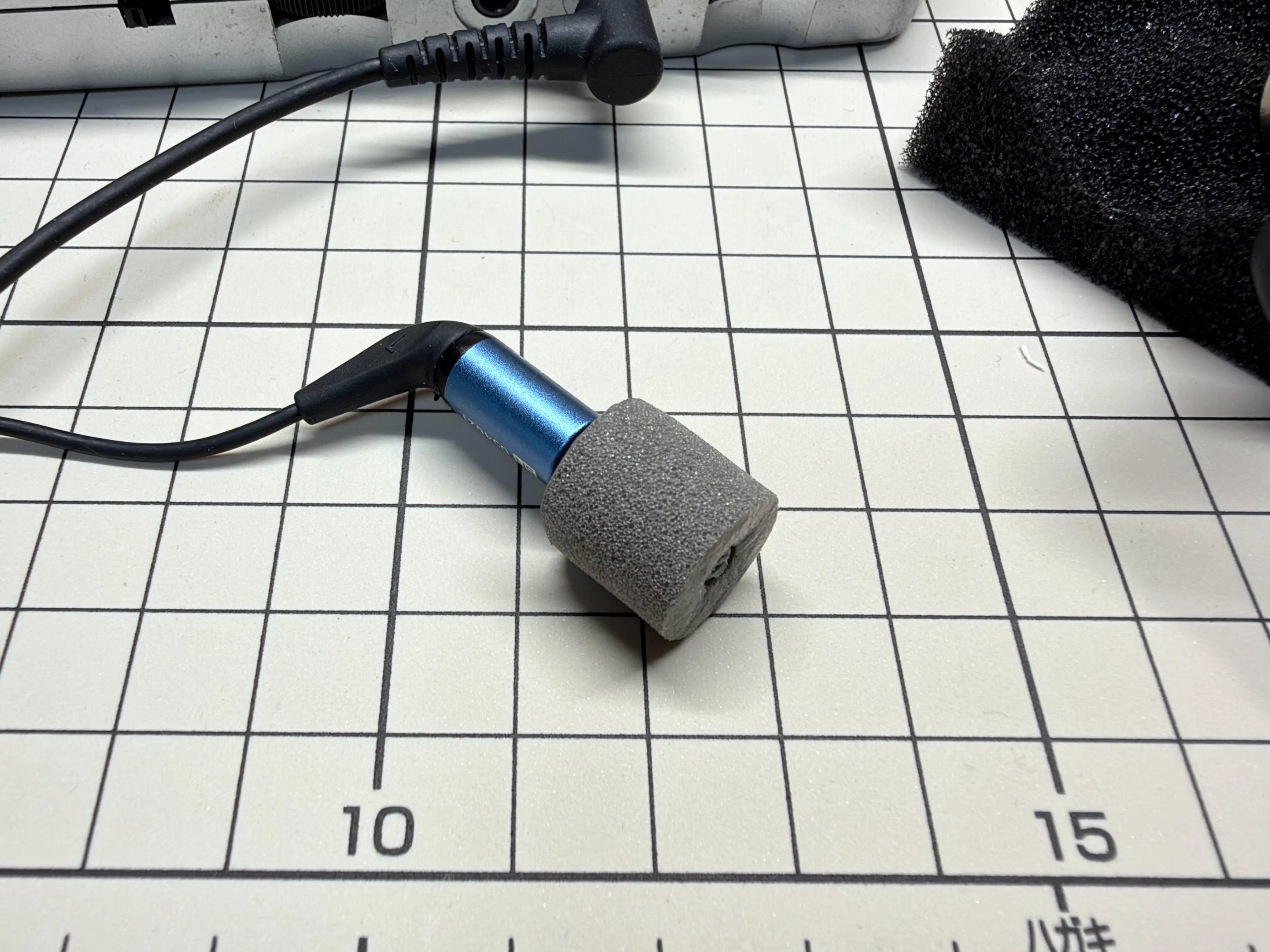
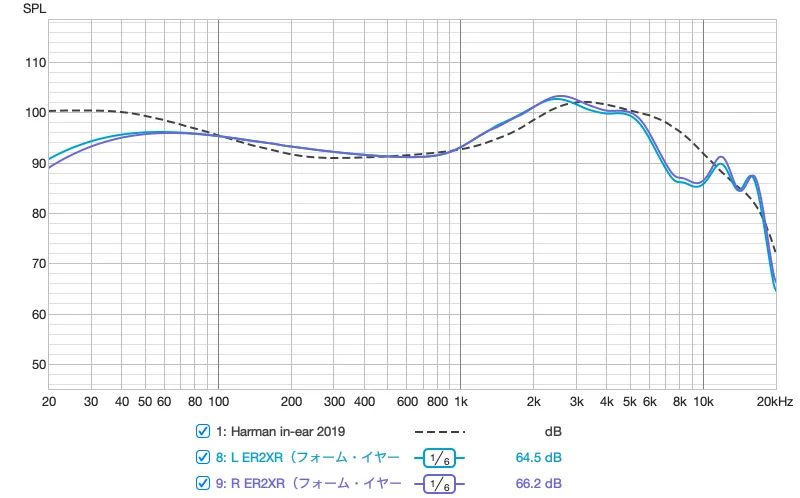
Below 1 kHz this is no different from the other eartips either. 3 to 5 kHz comes out higher than with the flange types, and looking at just that band it’s the closest to the target. Above 8 kHz there are only small bumps at 10.5 kHz and 13 kHz — no large peak like the double-flange.
Summary
- Regardless of the model, large dips and peaks show up above 10 kHz. Is that down to coupler resonance and how it’s fitted? Probably best not to read it as a property of the earphone.
- When I changed the insertion depth and the eartip type on the ER2XR, below 1 kHz barely changed at all. As long as a seal is there, the bass seems to come out more consistently than I expected. The differences show above 3 kHz, especially above 8 kHz, and since the coupler and the fit have a big effect there too, it’s hard to judge.
- For ER2XR eartips I’d been using the triple-flange ones because they isolate so well, but the foam tips might be better.
- It’s not a tool for absolute accuracy, but for measuring and comparing several earphones under the same conditions, or checking what EQ does, it’s more than good enough.
- Getting the hang of it will take a bit more trial and error.
Now I can see the response of the actual units in my hands as a graph, rather than the spec sheet. Next I want to try how close I can get to the shape I’m after with EQ.
That turned into the next post: Equalizing earphones with AutoEq and a Qudelix-5K.